Wooden Cat Tower for Cats: Stable, Stylish & Easy-Clean
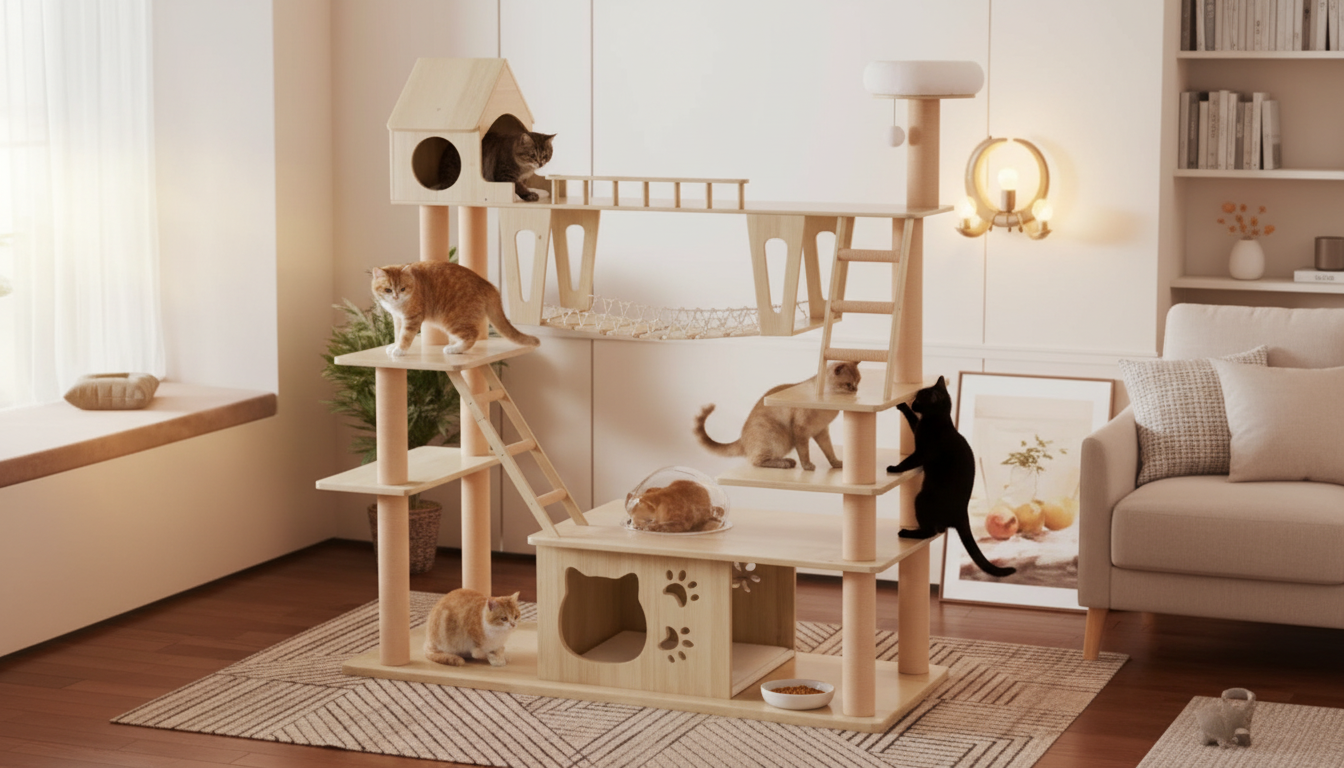
Wooden Cat Tower for Cats: A Stable Climbing Space That Fits the Home
A wooden cat tower can add a dedicated climbing and resting zone that feels sturdier and more furniture-like than many carpeted options. For larger cats or multi-cat homes, the right design comes down to stability, platform size, scratch surfaces, and easy-to-clean materials—so the tower gets used daily instead of becoming a dust collector.
What a Wooden Cat Tower Adds to a Cat’s Day
Cats experience a home in layers. Adding vertical territory can reduce competition, create predictable “time-out” spots, and give cats a way to share space without constantly negotiating who owns the hallway. A wooden tower also tends to feel more solid underfoot, which can encourage use—especially for bigger cats that don’t trust springy platforms.
- Vertical territory that reduces crowding in multi-cat spaces
- Perches that support natural observing and resting behavior
- Scratch-friendly zones that help redirect claws away from furniture
- A predictable “safe spot” that can lower tension during household changes
- A single footprint that combines climbing, lounging, and play
For guidance on building a cat-friendly environment with enrichment and “safe zones,” resources from the American Association of Feline Practitioners (AAFP) and the ASPCA can help reinforce what many cats show naturally: access to height and choice often improves everyday comfort.
Key Features to Look For (Especially for Big Cats)
Not all towers are built for a full-grown cat launching upward at speed. If a tower wobbles once, some cats avoid it entirely. Focus first on the structure, then on the comfort layers.
- Base width and overall weight that resist tipping when a cat launches upward
- Large platforms and beds that allow a full turn-around without spilling over edges
- High-load fasteners and reinforced joints (screws/bolts, corner bracing, thick uprights)
- Scratch surfaces that match preference: sisal rope, sisal fabric, or replaceable scratch pads
- Rounded edges and grippy surfaces to prevent slips during quick climbs
- Easy-clean materials (sealed wood, removable cushions) for shedding and hairballs
- Height that fits the room: enough vertical value without forcing unstable, narrow columns
Quick Fit Check for a Wooden Cat Tower
| Feature | Why it matters | What to look for |
|---|---|---|
| Base + stability | Prevents tipping and wobble during jumps | Wide base, heavier build, anti-slip feet; optional wall anchor points |
| Platform size | Comfort and confidence for larger bodies | Broad shelves, deep beds, raised lips; no “postage-stamp” steps |
| Scratch zones | Encourages consistent use; protects furniture | Sisal-wrapped posts, multiple scratch angles (vertical + angled) |
| Materials + finish | Durability and cleanup | Sealed wood surfaces, removable washable pads, low-odor materials |
| Layout | Reduces traffic jams and falls | Staggered steps, clear jump paths, multiple resting spots |
Placement Ideas That Increase Daily Use
A great tower in the wrong location becomes “that thing in the corner.” Cats use what’s integrated into their routine, so placement should support the way they already move through the home.
- Place it near a window for “cat TV,” but avoid blocking heating/cooling vents.
- Set it in a social room where cats already spend time, not hidden in a back corner.
- For timid cats, keep it away from startle zones like slamming doors or loud appliances.
- Leave a clear launch/landing zone around the tower (no clutter; avoid slippery throw rugs).
- If possible, create a route: floor → tower → sofa/ledge so it feels like a walkway.
If you’re introducing the tower to a skeptical cat, place a small pinch of catnip (if your cat responds to it) or a favorite treat on a mid-level platform for a few days. The goal is calm exploration, not “chasing” the cat onto it.
Comfort and Safety Details That Matter Over Time
Wooden towers can stay attractive for years, but only if the little maintenance habits are in place. Stability and traction matter more over months than they do on day one.
- Check for wobble after assembly and re-tighten hardware after the first week of use.
- Choose cushions or pads that can be removed and washed (especially for long-haired cats).
- Inspect scratch posts for fraying or loosened rope; replace or repair before it becomes a snag risk.
- Prefer designs with multiple exits so a cat doesn’t feel trapped by another pet.
- If kittens or seniors will use it, prioritize shorter step distances and high-traction surfaces.
Featured Option: Large Wooden Cat Tower for Big Cats
When the priority is a more substantial feel—wide resting areas, a stable climb, and a look that blends with home decor—a bigger wooden build can be a practical upgrade from narrow, top-heavy trees.
- Designed for bigger bodies that need wider resting areas and a sturdier feel
- A wooden build that can blend into home decor while providing vertical territory
- Best suited to households that want a dedicated climbing and lounge hub in one footprint
- Before purchase: confirm room measurements, preferred height, and cleaning routine
Large Wooden Cat Tower for Big Cats
More in-stock picks
- Spacious 6-8 Person Waterproof Camping Tent with Three Rooms
- Elegant Women’s Genuine Leather Sandals
Simple Care Routine for a Wooden Cat Tower
FAQ
How tall should a wooden cat tower be?
Match height to your cat’s confidence and your room layout: enough elevation for perching, with stable steps and platforms. Taller is only better if the base and uprights stay solid without wobble.
Is wood better than carpeted cat trees?
Wood is often easier to wipe down and tends to look more furniture-like, while carpeted surfaces can add grip and softness. The best choice depends on your cleaning needs, scratch preferences, and whether pads are removable.
How can a cat tower be made safer for a heavy cat?
Choose a wide, stable base, thick supports, large platforms, and non-slip surfaces, and check hardware regularly. Place it on a level floor and use wall anchoring if the design allows.













Leave a comment