Cordless Sonar Pool Robot: Better Coverage, Less Hassle
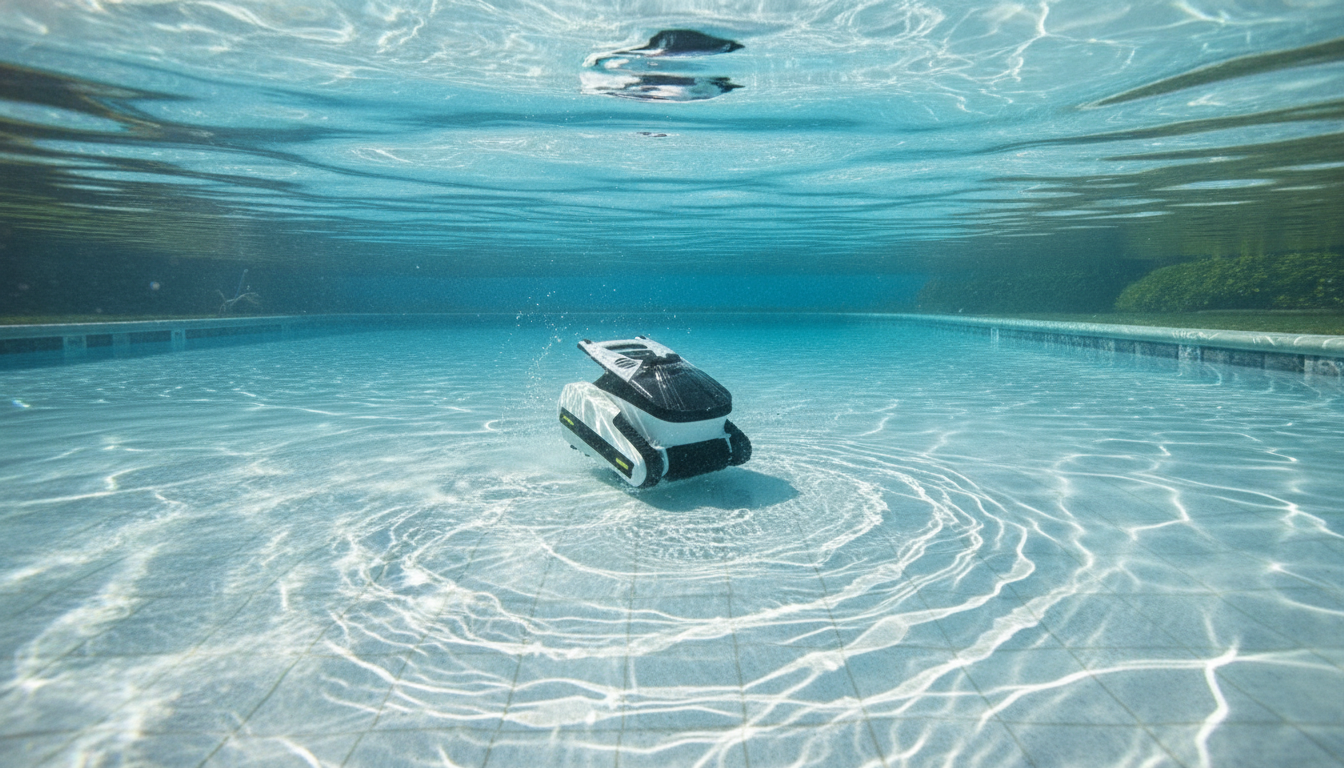
Cordless Sonar-Guided Robotic Pool Vacuum: Smarter Coverage, Longer Runtime
A cordless robotic pool vacuum with sonar-based path planning is built to clean with fewer missed spots, fewer repeated passes, and less setup than cabled models. Instead of managing a floating power cord (and the tangles that can come with it), you drop the robot in, start a cycle, and let it work. Below is a practical breakdown of how sonar navigation helps coverage, what “long-lasting” runtime really means day-to-day, and how to match a robot to your pool’s size, surface, and debris profile.
What makes a cordless sonar-guided pool robot different
Cordless pool robots run on an internal rechargeable battery, so there’s no power cable stretched across the deck and into the water. That reduces setup time, removes a common source of tangles, and can make storage simpler between cleanings.
The bigger shift is navigation. Sonar-guided models use acoustic sensing (sonar) to estimate distances to boundaries and obstacles, then plan a more systematic coverage pattern than robots that rely mostly on random wandering. In practice, better route planning usually means fewer overlaps, more consistent floor passes, and (on models designed for it) more reliable wall climbs and transitions.
This style of cleaner tends to fit homeowners who want automated maintenance without hoses, booster pumps, or a power cord near the pool.
How sonar path planning improves coverage
Mapping: understanding the pool’s “edges”
Sonar measures distances to walls, slopes, and major features, helping the robot estimate where it is and how big the pool is. It’s not the same as creating a perfect 3D blueprint, but it gives the robot better situational awareness than simple bump-and-turn behavior.
Routing: fewer missed patches and fewer repeats
With a rough map and position estimate, the robot can choose lanes or zones to cover—aiming to reduce the classic “cleaned the same strip five times” problem while leaving another area lightly touched. That can be especially useful in larger pools where random navigation may need extra time to achieve similar coverage.
Obstacle handling: recovering more gracefully
Drains, steps, sun shelves, and pool toys can interrupt a cycle. A planned-navigation robot can re-route when it detects a blockage or gets redirected, rather than repeatedly returning to the same snag point.
Real-world factors that still matter
Because sonar is acoustic, cloudy water is generally less of a problem than it would be for camera-based systems. However, pool geometry (freeform curves, tight coves), steep slopes, and surface friction still influence how well any robot tracks, turns, and climbs.
Long-lasting runtime: what to check before buying
“Long-lasting” should be evaluated as a complete cleaning cycle, not just a marketing number. Before choosing a cordless robot, consider these factors:
- Battery capacity and stated runtime: Compare advertised minutes to your pool’s square footage and how often you need to clean. A short runtime can be fine for smaller pools or frequent light cleanings, but it may struggle after storms or heavy leaf drop.
- Charging time and turnaround: A long runtime matters more when recharge time fits your routine (for example, same-day turnaround for back-to-back cycles).
- Cleaning mode efficiency: Floor-only cycles typically last longer than floor + walls (for models that support wall cleaning), because climbing and waterline work can demand more power.
- Debris conditions: Leaves, acorns, and pine needles add load and can fill baskets quickly; fine silt can increase resistance through filters—both can reduce effective runtime.
- Battery care: Store out of extreme heat/cold and avoid leaving the unit fully discharged for long periods to help preserve battery health.
Pool compatibility checklist
Not every robot behaves the same across different pool builds. Use this checklist to avoid mismatches:
Quick match: pool needs vs. robot features
| Pool situation | Helpful feature | Why it matters |
|---|---|---|
| Large pool or frequent use | Higher battery runtime + efficient route planning | More area cleaned per cycle with fewer repeats |
| Freeform pool with curves | Sonar-based mapping/navigation | Improves systematic coverage in irregular layouts |
| Fine sediment/silt | Fine filtration + strong suction | Captures small particles instead of re-circulating them |
| Leafy environment | Larger debris basket + strong pickup | Reduces mid-cycle emptying and clogs |
| Mixed depths/ledges | Good traction + stable climbing behavior | Prevents stalls and improves wall/floor transitions |
Daily use: setup, cleaning cycles, and maintenance
For broader pool and chemical safety guidance, review resources from the U.S. Consumer Product Safety Commission and the CDC.
What to expect on performance and noise
Featured product
If you want cable-free operation with navigation designed to reduce repeats and missed areas, consider the Intelligent Robotic Pool Vacuum Cordless, Long-lasting, with Sonar Path Planning. It’s built around sonar-based planning to support more systematic coverage and straightforward drop-in operation.
More in-stock picks
- Elegant Marble & Copper Wall Lamp
- Master Your Paycheck: The Smart, Calm, and Confident Way to Save Your Salary (Digital Guide)
FAQ
How long does a cordless robotic pool vacuum typically run on a charge?
Runtime varies by battery capacity, cleaning mode, pool surface friction, and debris load. Match the stated runtime to your pool size and plan for shorter cycles when leaves or fine silt are heavy.
Does sonar navigation work in cloudy water?
Sonar navigation uses acoustic sensing rather than camera clarity, so cloudy water is typically less disruptive. Pool shape, obstacles, and traction still affect how consistently the robot covers floors and walls.
What maintenance keeps suction and coverage consistent?
Rinse the filter/basket after each use, clear hair and debris from brushes/rollers, and periodically inspect seals and wear parts. Store and charge the robot properly so the battery and charging contacts stay in good condition.














Leave a comment