2200W Blender & Grinder: Smoothies, Juices, Prep
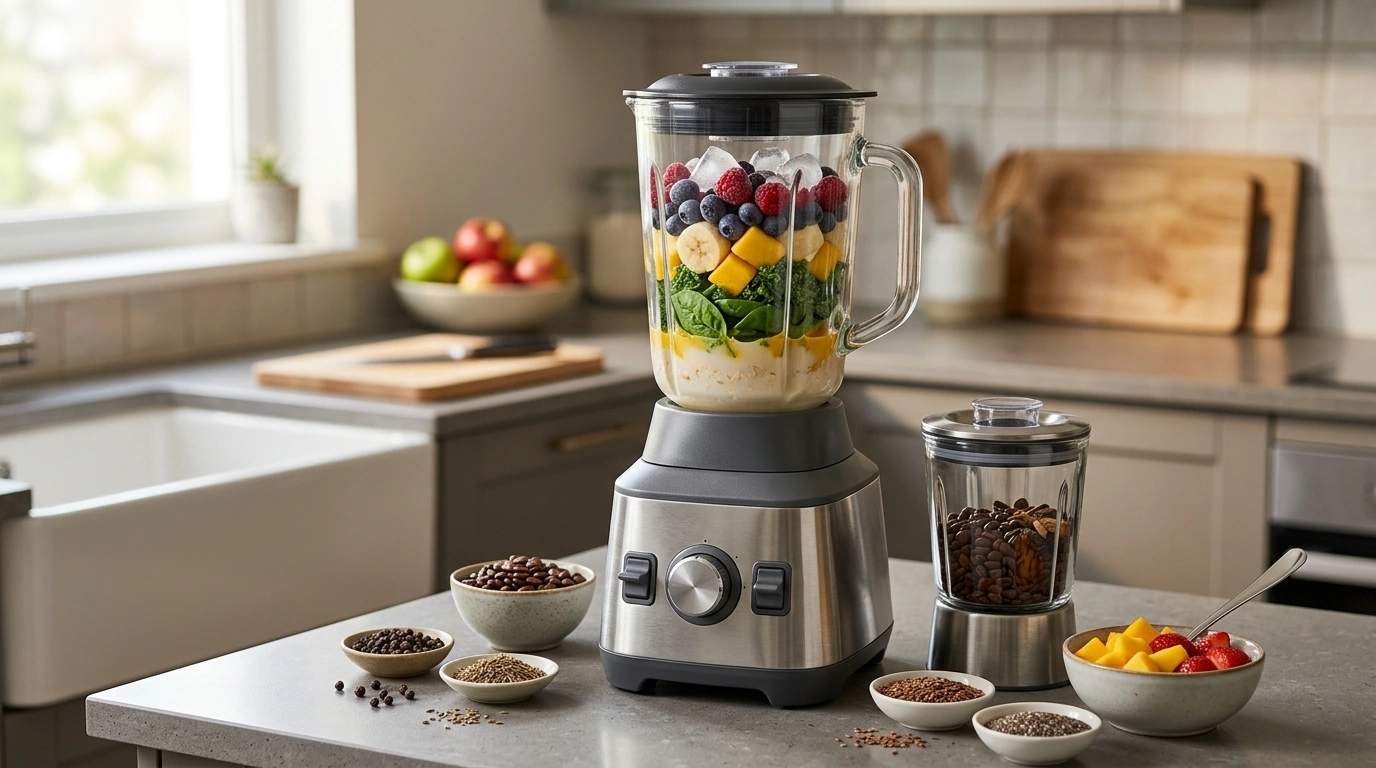
2200W Professional Blender and Grinder for Smoothies, Juices, and Food Prep
A high-powered blender can do the work of several countertop tools when it handles smoothies, blended juices, sauces, and dry grinding in one setup. The day-to-day difference isn’t just the wattage on the box—it’s how well the motor holds speed under load, how efficiently the jar and blades circulate ingredients, and how easy it is to clean up when you’re done. Below is a practical guide to what matters for real kitchens, plus a quick look at an in-stock 2200W blender-and-grinder option.
What a 2200W blender-and-grinder setup can handle
A 2200W blender-and-grinder is built for more than basic protein shakes. The extra power is most noticeable when you blend thick mixtures or use a lot of frozen ingredients.
- Smoothies: Crushes frozen fruit and ice into a consistent texture with fewer pauses to stir.
- Juices and blended drinks: Produces fine blends for fruit/vegetable drinks (note: it’s not the same thing as a press-style juicer that separates pulp).
- Food prep: Purees soups, mixes batters, emulsifies dressings, and blends sauces.
- Grinding: Processes dry ingredients such as coffee beans, spices, seeds, and grains (best with a dedicated dry cup/jar when available).
- Time savings: Fewer appliances on the counter and fewer steps between prep tasks.
For nutrition details on common smoothie add-ins (fruit, greens, seeds), USDA FoodData Central is a helpful reference for comparing calories, fiber, and micronutrients: USDA FoodData Central.
Key specs that affect real-world results
Two blenders can share the same wattage and still perform very differently. These are the specs that tend to show up in daily use:
- Motor power (2200W): Higher wattage typically improves ice-crushing and thick blends, especially at lower liquid ratios.
- Blade and airflow design: Blade angle and jar shape work together to pull ingredients into a vortex and reduce “dead zones.”
- Capacity: Match jar size to your batch size (single-serve vs. family batches) to avoid overfilling.
- Speed control and pulse: Helps move from chunky to smooth, and gives control for salsas or chopped textures.
- Build and stability: A heavier base, suction feet, and secure jar locking reduce wobble with dense mixtures.
| Factor | Why it matters | Best for |
|---|---|---|
| 2200W motor | Maintains speed under load for thick blends | Frozen smoothies, nut-based blends, ice crushing |
| Pulse function | Short bursts to break up chunks without over-blending | Salsas, chopped veggies, controlled texture |
| Multiple speeds | Fine-tunes texture and reduces overheating | Soups, sauces, batters, dressings |
| Grinding capability | Handles dry ingredients in small batches | Spices, coffee beans, seeds, grains |
| Jar shape & blade geometry | Improves circulation and consistency | Creamy smoothies, purees, thick dips |
Smoothies and frozen blends: consistency without frustration
High power helps, but technique is what keeps thick smoothies from turning into a stalled, air-pocket mess.
- Use the layering method: Add liquids first, then soft produce, then frozen ingredients and ice on top. This keeps the blades moving and helps pull ingredients downward.
- Thick smoothie tip: Start on a lower speed, ramp up, and use the pulse function to clear air pockets before adding more liquid.
- Fiber-forward blends: A stronger motor helps break down greens and seeds for a smoother mouthfeel (especially helpful if you prefer less “gritty” texture).
- Ice crushing: Short pulses can reduce strain and help achieve a finer, snowier texture.
- Avoid overheating: For long blends (like nut butters or ultra-thick mixes), blend in intervals and scrape down between cycles.
For practical healthy-eating context when building smoothies with fruits and vegetables, Harvard’s nutrition guidance is a solid overview: Harvard T.H. Chan School of Public Health — Vegetables and Fruits.
Grinding and dry prep: spices, beans, seeds, and more
Grinding is where “more power” can be a double-edged sword: it can pulverize quickly, but it can also heat ingredients if you run it continuously. The goal is short, controlled bursts.
Daily usability: noise, cleanup, and safety
For general home kitchen safety reminders—especially around cleaning and handling food-contact equipment—see: FDA Food Safety at Home.
Best-fit uses and who this blender suits
Product overview: 2200W Professional Blender and Grinder
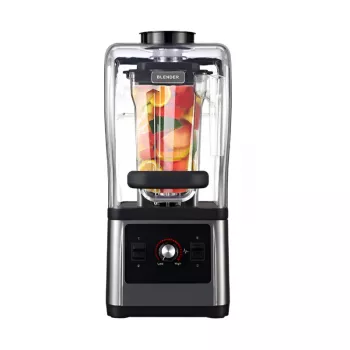
If your routine includes frozen smoothies, thicker blends, and multipurpose prep, the 2200W Professional Blender and Grinder for Smoothies, Juices, and Food Prep is designed for strong torque and versatile kitchen use. It’s built to cover everyday blending plus dry grinding, which can simplify the counter setup for households that bounce between drinks, sauces, and spice prep.
| Item | Details |
|---|---|
| Name | 2200W Professional Blender and Grinder for Smoothies, Juices, and Food Prep |
| Availability | In stock |
| Price | $460.47 USD |
| Primary uses | Smoothies, blended juices, sauces, soups, grinding dry ingredients |
Other in-stock home upgrades worth a look
- Smart Planter with Real-time Temperature and Soil Moisture Monitoring (for keeping fresh herbs and greens growing at home).
- AI Image Prompts for Stunning Visuals | Aesthetic Prompt Writing Guide for Creators, Designers & Digital Artists (digital download).
FAQ
Is a blender the same as a juicer for making juice?
No. A blender keeps the whole fruit or vegetable (including fiber), creating a thicker blended drink, while a juicer separates liquid from pulp for a lighter texture.
Can a high-power blender grind coffee and spices?
Yes, for small batches—use short pulses to limit heat and prevent scorching aromas. For very uniform coffee grounds (especially espresso), a burr grinder still typically performs better.
What is the best order to add ingredients for smoothies with ice?
Add liquid first, then soft ingredients, and place frozen items and ice on top to keep the blades circulating. If an air pocket forms, pulse briefly to drop ingredients into the vortex.















Leave a comment