Matte Black Wall-Mount Dual Handle Faucet: Fit & Care
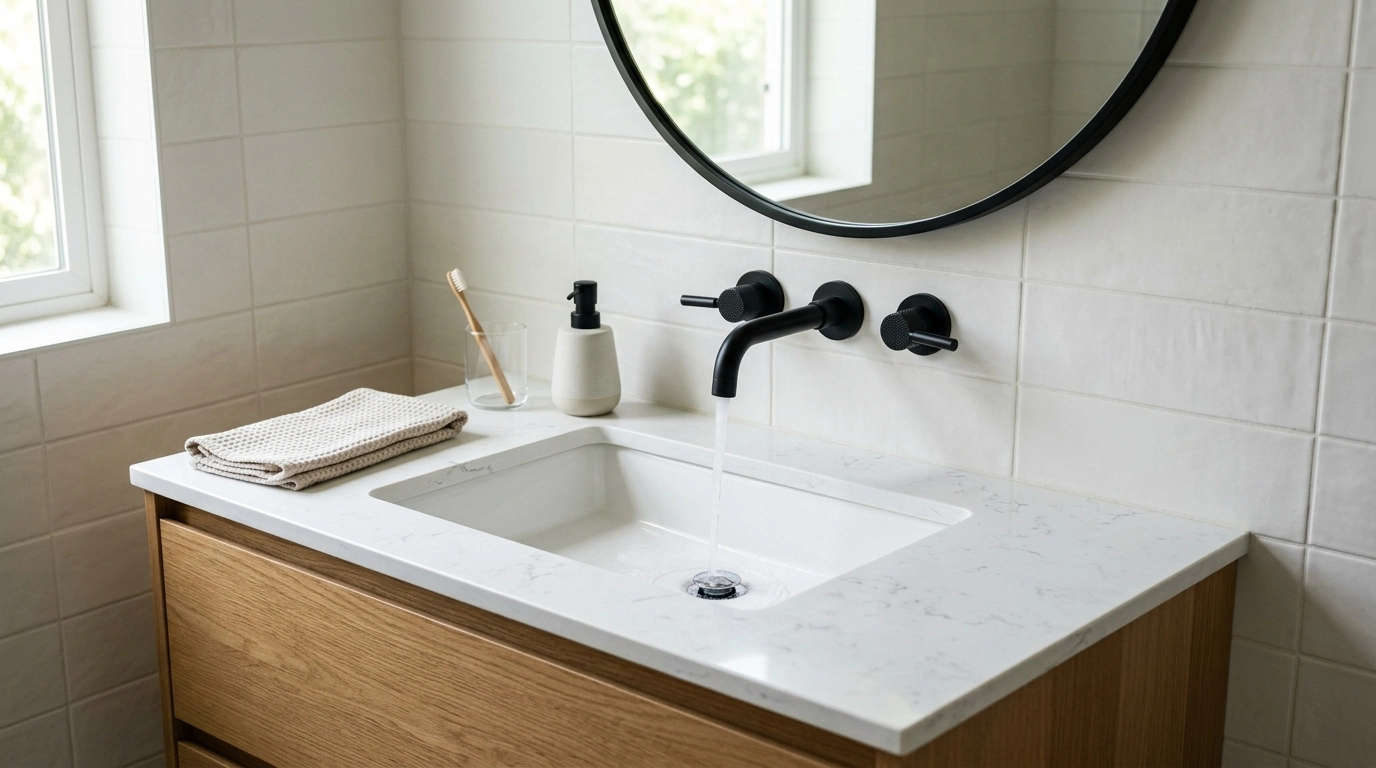
Contemporary Matte Black Wall-Mounted Dual Handle Bathroom Faucet
A wall-mounted faucet with a matte black finish brings crisp lines and more open counter space to modern bathrooms. With the spout and handles set into the wall, the sink area feels less crowded, and cleanup around the basin is often simpler. The tradeoff is that wall-mount styles demand better planning—especially for in-wall depth, spout reach, and long-term service access. Below is a practical guide to choosing the right configuration, coordinating the look, and keeping a matte finish consistent over time.
What Makes a Wall-Mounted Dual Handle Faucet Different
Wall-mounted faucets install above the sink rather than on the countertop or sink deck, which changes both the look and the planning requirements.
- More visual “air” around the sink: With no deck plate or faucet body on the counter, the vanity top reads cleaner and is easier to wipe down.
- Two handles, more control: Separate hot and cold handles allow precise temperature dialing and give the wall a balanced, architectural feel.
- Great for tight deck space: Vessel sinks and minimalist vanities benefit when there’s limited room behind or beside the bowl.
- Rough-in planning matters: Plumbing depth, spout reach, and handle placement must be right before the wall is finished to avoid splashing, awkward hand clearance, or trim that doesn’t sit flush.
Matte Black Finish: Style and Practical Considerations
Matte black is popular because it provides contrast without the glare of polished finishes. It looks intentional against white tile, warm wood tones, and natural stone, and it can complement both modern and transitional bathrooms.
- Easy to pair, bold without being shiny: Matte black can frame the sink area and visually “anchor” floating vanities and simple mirrors.
- Durability depends on the coating: Not all matte blacks are created equal—manufacturing process and quality control affect how well the finish resists wear and uneven sheen.
- Water spots are more noticeable: Dark finishes show mineral residue and soap film sooner, particularly in hard-water homes. Quick wipe-down habits make a big difference.
- Match or mix with intention: Coordinating towel bars, shower trim, and mirror frames creates a unified look, but mixing matte black with brushed nickel or brass can look modern when done consistently across the space.
For efficiency and compliance, many homeowners also consider certified flow standards. If minimizing water use is a priority, review guidance from EPA WaterSense and confirm what’s available/required locally.
Sizing and Fit: Spout Reach, Height, and Sink Pairing
Because the faucet is anchored to the wall, proportions matter more than with a deck-mounted model. The goal is to place the water stream where the sink can handle it—usually near the drain—while keeping enough room for hands, soap, and daily use.
- Spout reach: Aim for the water stream to land close to the drain, not on the rim or near the front edge. This reduces splash and keeps the basin functional.
- Spout height: Comfortable handwashing needs clearance, but too much height increases the drop distance and can cause splashback—especially with shallow basins.
- Vessel sink clearance: Confirm the spout outlet clears the rim with enough room for hands and soap pumping without knuckle bumps.
- Finished wall thickness: Tile, stone, panels, and backer board add up. Plan early so the trim aligns cleanly and seals correctly.
Quick Fit Checklist for Wall-Mounted Faucets
| Measurement / Detail | What to Confirm | Why It Matters |
|---|---|---|
| Spout reach | Water lands near the drain (not on the rim) | Reduces splashing and improves usability |
| Spout height from sink rim | Enough clearance for hands and soap | Comfort and everyday practicality |
| Handle spacing | Comfortable grip and symmetry on the wall | Better ergonomics and visual balance |
| In-wall valve depth | Matches finished wall thickness | Ensures trim sits flush and seals properly |
| Drain compatibility | Drain style and overflow needs match the sink | Prevents leaks and installation delays |
Installation Notes and What to Ask an Installer
Installation is where wall-mounted faucets differ most from standard deck-mounts. The faucet typically requires a rough-in valve and careful alignment before the wall surface is finished.
For general standards and terminology, resources like the American National Standards Institute (ANSI) and organizations such as IAPMO can be helpful starting points when coordinating specs with a licensed professional.
Everyday Use: Water Pressure, Temperature Control, and Noise
Care and Cleaning for a Matte Finish
Product Spotlight
In-Stock Picks
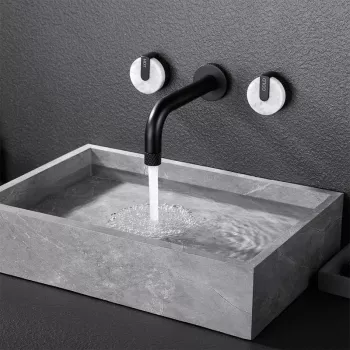
- Contemporary Matte Black Wall-Mounted Dual Handle Bathroom Faucet
- Smart Planter with Real-time Temperature and Soil Moisture Monitoring
FAQ
Does a wall-mounted bathroom faucet work with any sink?
It can work with many sinks, but compatibility depends on spout reach, spout height, and the sink’s shape. The water stream should land near the drain, and vessel sinks need extra clearance over the rim to prevent splashing and cramped hand space.
Is matte black hard to keep clean?
Matte black isn’t difficult, but water spots and soap film can show more than on lighter finishes. Mild soap, a soft cloth, and drying after heavy use help maintain an even, consistent look—especially in hard-water areas.
What’s the biggest installation risk with wall-mounted faucets?
The biggest risk is incorrect rough-in depth or misalignment behind the finished wall, which can lead to trim that doesn’t sit flush or a spout that splashes. Confirm the correct valve requirements, finished wall thickness, handle spacing, and a plan for future servicing before the wall is closed.













Leave a comment