Safer Pet Drying: Adjustable Temp 360° Warm-Wind Box
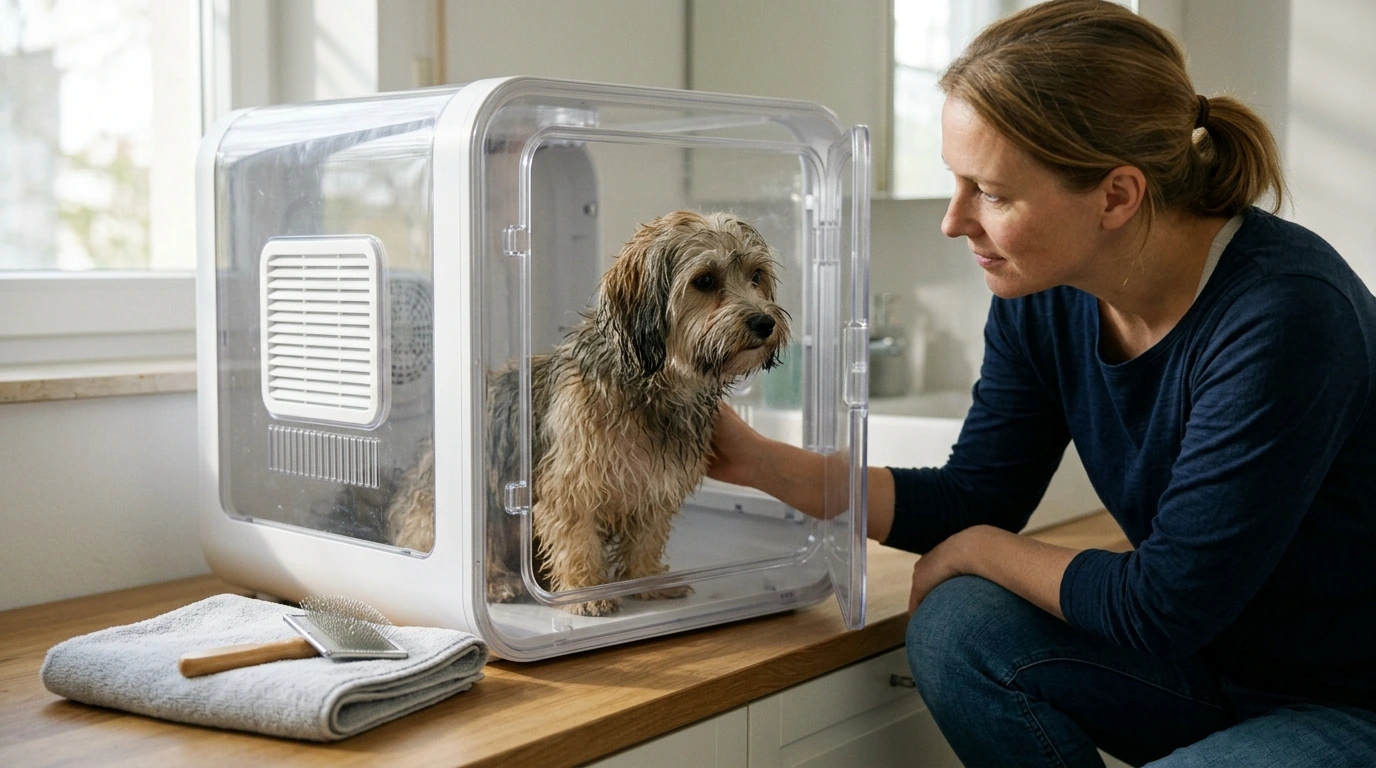
Pet Grooming Hair Dryer Box with Adjustable Temperature and 360° Warm Wind
Drying a pet after a bath can take longer than the wash itself—especially with dense coats, anxious dogs, or cats that dislike loud handheld dryers. A dryer box creates a calmer, hands-free drying routine by circulating warm air evenly around the pet while allowing close supervision. This guide explains how an adjustable-temperature, 360° warm-wind dryer box works, what to look for, and how to use it safely for consistent, comfortable results.
What a grooming dryer box does
- Provides hands-free drying inside an enclosed space so pets can dry with less handling.
- Circulates warm air around the body to reduce damp spots that often remain with towel drying alone.
- Helps streamline grooming for multi-pet homes and busy schedules, while keeping the drying area tidy.
- Supports a calmer routine for pets that dislike direct airflow from handheld dryers (still requires acclimation and supervision).
Adjustable temperature and 360° warm wind: why it matters
- Adjustable temperature helps match warmth to coat thickness, pet size, and sensitivity; lower settings are typically better for cats, seniors, and short-coated pets.
- Even, 360° circulation reduces the need to reposition the pet repeatedly and helps dry the underside and legs more uniformly.
- Consistent airflow can shorten total drying time compared with towel-only methods, especially for plush coats.
- Controlled warmth supports comfort, but the safest approach is gradual ramp-up and frequent checks for panting, restlessness, or overheating.
For general grooming best practices and coat care basics, reputable references include the American Kennel Club (AKC) and the American Veterinary Medical Association (AVMA).
Best-use scenarios (and when to avoid a dryer box)
- Useful for: small-to-medium pets, double coats that hold water, post-walk rain drying, and pets that tolerate crate-like spaces.
- Helpful for: pets with mild anxiety when the routine is introduced slowly and paired with positive reinforcement.
- Avoid or use only with veterinary guidance for: pets with breathing issues, heat intolerance, severe anxiety/claustrophobia, or conditions that worsen with warmth.
- Not a substitute for supervision; pets should not be left unattended while drying.
How to use a dryer box safely
- Pre-dry first: towel thoroughly (and optionally use a quick, low setting handheld dryer at a distance) to remove dripping water and reduce total time in the box.
- Start low and short: begin with the lowest temperature and a short session to help the pet acclimate; gradually increase duration if the pet stays relaxed.
- Check frequently: monitor ears, paws, and belly for excess warmth; watch for panting, drooling, wide eyes, scratching at the door, or repeated attempts to escape.
- Keep the coat moving: brush before and after; for thick coats, brief mid-session brushing can prevent damp undercoat pockets.
- Maintain airflow: keep vents unobstructed; ensure the box sits on a stable surface with clearance around intake/exhaust areas.
- Clean between sessions: remove hair buildup and wipe interior surfaces to keep airflow consistent and reduce odors.
Routine settings guide by coat type
- Short coat: use lower warmth and shorter cycles; towel drying often does most of the work.
- Medium coat: low-to-moderate warmth with steady airflow; brush to prevent lingering dampness at the base.
- Double coat (husky, shepherd types): prioritize airflow and time over high heat; use multiple shorter cycles with brushing to lift undercoat.
- Curly/dense coat (poodle mixes): pre-blot well, brush, then use moderate warmth; finish with brushing to reduce tangling as the coat dries.
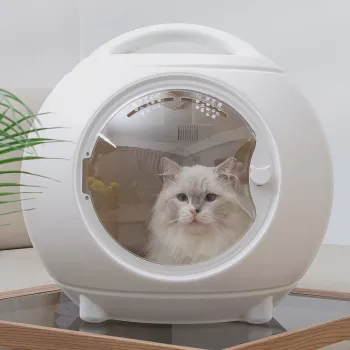
- Cats: keep sessions short, warmth low, and the environment quiet; end early at the first sign of stress.
Quick drying plan (adjust based on pet comfort)
| Coat type | Start setting | Typical session pattern | Best finishing step |
|---|---|---|---|
| Short | Lowest warmth | 1–2 short cycles, check often | Towel + light brush |
| Medium | Low warmth | 2–3 cycles, brief breaks | Brush through and air out |
| Double | Low warmth, higher airflow | Multiple short cycles with brushing | Undercoat rake/brush |
| Curly/Dense | Low to moderate warmth | 2–4 cycles, detangle as needed | Brush/comb to prevent mats |
| Cats | Lowest warmth, quiet setting | Very short cycle, frequent checks | Stop early, towel finish |
Comfort and training tips for anxious pets
Product spotlight: Pet Grooming Hair Dryer Box with Adjustable Temperature and 360° Warm Wind
If the goal is a more contained drying routine that reduces the “chase and blast” feel of a handheld dryer, the Pet Grooming Hair Dryer Box with Adjustable Temperature and 360° Warm Wind is built around two practical ideas: temperature flexibility and all-around circulation.
More in-store picks for a tidy grooming space
- Ceramic Rectangular Vessel Sink with Blue Interior for a dedicated wash-up area that’s easy to wipe down after baths.
- Luxury Rectangular Crystal Chandelier Ceiling Lamp for Living Room & Lobby to brighten a grooming corner and make coat checks (ears, paws, belly) easier.
Care, cleaning, and long-term upkeep
FAQ
Is a pet dryer box safe for cats and small dogs?
It can be safe when used with low heat, short sessions, and constant supervision. Introduce the box gradually and stop immediately if you notice stress signals like frantic scratching, heavy panting, or repeated escape attempts; consult a veterinarian before use for brachycephalic or respiratory-compromised pets.
How long should a pet stay in a grooming dryer box?
Drying time depends on coat type and how thoroughly the pet was towel-dried first. Multiple short cycles with breaks and frequent hands-on checks are generally safer and more comfortable than one long session.
What temperature should be used for drying a pet after a bath?
Start at the lowest warm setting that keeps your pet comfortable, prioritizing airflow over heat. Adjust gradually and end the session if the coat or skin feels overly warm or your pet shows signs of overheating or agitation.














Leave a comment