20-Inch Front-Opening Carry-On Suitcase With Lock
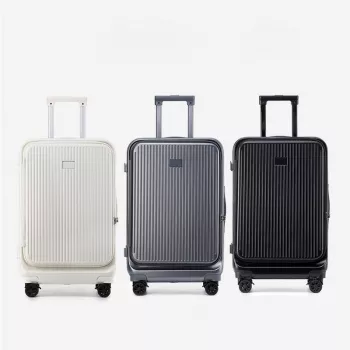
20-Inch Rolling Trolley Suitcase with Front Opening and Password Lock: Carry-On Convenience for Organized Travel
A 20-inch carry-on suitcase with a front-opening compartment and a built-in password lock is designed for travelers who want fast access to essentials without unpacking the main compartment. This guide breaks down how front access changes packing, what to look for in wheels and handles, how password locks work in real use, and when a 20-inch size is the right fit for flights, trains, and weekend trips.
What Makes a Front-Opening Carry-On Different
Front-opening carry-ons add a dedicated access panel on the face of the suitcase, creating a “quick-entry” zone for items that come out repeatedly during transit. Instead of unzipping the entire bag like a book, the main compartment can stay closed while the front section handles day-of-travel needs.
- Front access panel provides quick entry to a dedicated section, helpful during security checks, boarding, and tight connections.
- Main compartment stays closed while retrieving a laptop, documents, chargers, or a light jacket from the front area.
- Front-opening designs tend to favor “vertical packing” and require less floor space than clamshell suitcases in cramped rooms.
- Useful for business travel and short trips where items need to be accessed repeatedly.
- Potential tradeoff: front compartments can reduce the depth of the main packing cavity if heavily padded.
Front-Opening vs. Traditional Clamshell Carry-On
| Feature | Front-Opening Suitcase | Traditional Clamshell |
|---|---|---|
| Access in a narrow aisle | Can open the front section without fully laying the bag flat | Typically needs to be opened like a book, requiring more space |
| Best for | Tech gear, documents, quick-grab items | General packing, maximizing a single main cavity |
| Organization | Often includes dividers/pockets in the front area | Usually relies on packing cubes and internal straps |
| Packing style | More structured, compartment-based | More flexible, one large area split into two halves |
| Common tradeoff | Slightly less main-compartment volume | Slower access to items during transit |
Size and Carry-On Practicality (20-Inch Class)
A 20-inch suitcase is a go-to choice for weekend trips and short business travel because it hits a practical middle ground: enough capacity for a compact wardrobe, but still oriented toward carry-on convenience. The detail that matters most is not the “20-inch” label—it’s the exterior measurements once wheels and handles are included.
- A 20-inch suitcase is commonly chosen for weekend trips and short business travel, balancing capacity with carry-on convenience.
- Carry-on rules vary by airline; the overall exterior dimensions (including wheels and handles) matter more than the named “20-inch” size.
- Consider typical trip length and wardrobe: compact size rewards planning, layers, and mix-and-match outfits.
- Front-opening space is best reserved for items needed in transit; avoid overstuffing that can affect zipper alignment and shell closure.
For general cabin baggage references, IATA’s guidance is a useful baseline (though airline-specific rules still apply): IATA: Cabin baggage guidance.
Password Lock Basics: What It Does Well (and What It Doesn’t)
A built-in password (combination) lock is best viewed as a travel convenience and a tamper deterrent. It helps keep zipper pulls secured during handling and reduces accidental openings when bags get squeezed into overhead bins or packed tightly in a trunk.
- A password (combination) lock helps deter casual tampering and keeps zippers secured during handling.
- Set-and-forget convenience: no small key to lose, and faster to open once the code is memorized.
- Combination locks are not the same as heavy-duty security; the goal is practical travel protection rather than high-security storage.
- If flying, confirm whether the lock is TSA-accepted when that matters for the destination and airport screening practices.
- Best habits: choose a memorable code that is not a common sequence, and store it securely (not on a tag attached to the suitcase).
For U.S. screening context, TSA summarizes what to expect with luggage locks here: TSA: Locks.
Mobility and Handling: Wheels, Handle, and Balance
Packing Strategy for a Front-Opening Suitcase
For reminders on what can and can’t fly (especially batteries and power banks), FAA’s reference is helpful: FAA: Pack Safe.
Who This Style Fits Best
Care, Maintenance, and Day-to-Day Durability Tips
Product Option Available
If a front-access carry-on matches how you move through airports and stations, this option is available now: 20-Inch Rolling Trolley Suitcase with Front Opening and Password Lock. It’s designed for carry-on-sized organization with a front compartment for quick-grab essentials and built-in combination-style locking for everyday travel protection.
- AI Image Prompts for Stunning Visuals | Aesthetic Prompt Writing Guide for Creators, Designers & Digital Artists | ai prompts for aesthetic images
- You Become Who You Surround Yourself With – A Powerful Guide on how social circle influences mindset, Confidence, Decisions & Personal Growth (Digital Download, Self-Improvement eBook)
Quick Snapshot
| Item | Detail |
|---|---|
| Product | 20-Inch Rolling Trolley Suitcase with Front Opening and Password Lock |
| Price | 328.01 USD |
| Availability | In stock |
FAQ
Is a 20-inch suitcase always accepted as a carry-on?
No. Airline carry-on limits vary, and the exterior dimensions (including wheels and handles) are what count, so it’s best to confirm the specific airline’s size rules before you fly.
How does a front-opening suitcase help during airport security?
It lets you reach electronics and documents from the front compartment without opening the main packing area. Keeping a “security-ready” pocket and avoiding overstuffing the front panel helps the zipper track smoothly when you need fast access.
Are password locks secure enough for travel?
Combination locks are a practical deterrent against casual tampering and help keep zipper pulls closed during handling, but they aren’t high-security safes. When flying, check whether a lock is TSA-accepted if that’s relevant to your route and screening process.













Leave a comment