6×8 Walk-In Polycarbonate Greenhouse: Outdoor Setup Guide
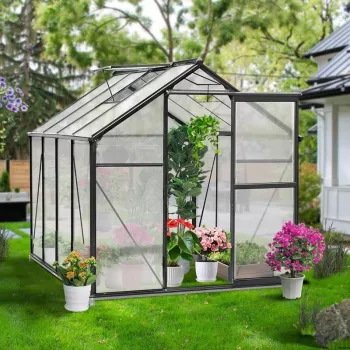
6 x 8 FT Walk-In Polycarbonate Greenhouse with Aluminum Frame for Outdoors
A 6 x 8 walk-in greenhouse hits a practical sweet spot: enough headroom to step inside comfortably, plus floor space for trays, pots, and tools—without turning your backyard into a full-time construction site. If you’re looking to start seeds earlier, shelter plants from wind and heavy rain, or keep tender containers safer through cold snaps, a polycarbonate panel greenhouse with an aluminum frame is a dependable, outdoor-ready approach. Below is what to expect from this style of greenhouse, how to place and anchor it, and how to set up the interior for airflow, stable temperatures, and easy day-to-day use.
What a 6 x 8 walk-in greenhouse is best for
A greenhouse of this size is less about commercial production and more about control—giving home gardeners a protected microclimate that’s easier to manage than open beds.
- Seed starting and early transplants: added warmth and wind protection help trays and starter pots develop sturdier stems.
- Season extension: get a head start on spring greens and keep cool-season crops producing later into fall.
- Overwintering: protect potted perennials, citrus, and tropicals when paired with frost protection strategies and close temperature monitoring.
- Propagation space: a more controlled environment for cuttings and humidity-loving plants when you balance misting with ventilation.
For fundamentals on greenhouse growing practices, the University of Minnesota Extension greenhouse guide is a solid reference point for home-scale setups.
Materials that matter outdoors: polycarbonate panels and aluminum framing
Outdoor greenhouses face daily sun cycles, wind gusts, watering humidity, and seasonal storms. Material choice helps determine how comfortable the interior stays—and how much maintenance you’ll deal with later.
- Polycarbonate panels diffuse sunlight to reduce harsh hot spots and help deliver more even light across benches, which can mean less scorching on tender seedlings.
- Better insulation than single-layer film: polycarbonate typically buffers temperature swings, helping prevent a big drop from warm afternoons to chilly nights.
- Aluminum frames resist rust and handle humid greenhouse conditions created by watering and transpiration.
- Storm performance depends on anchoring: in wind-prone areas, panel fastening and anchoring matter as much as frame material.
Size, layout, and capacity planning
A 6 x 8 greenhouse can feel roomy or cramped depending on how you plan the aisle and vertical storage. Start with how you actually move inside: watering can in hand, trays in both arms, or a rolling cart.
- Footprint planning: confirm the exterior footprint plus clearance around the greenhouse so you can reach panels, vents, and anchors for cleaning and repairs.
- Walkway strategy: a central aisle keeps it truly “walk-in.” Use one or two side benches depending on how often you’ll move tall plants in and out.
- Vertical space: add shelving above a bench for plug trays and small pots while reserving floor space for larger containers.
- Capacity estimate: many 6 x 8 setups comfortably fit 1–2 benches, a staging shelf, and a compact potting corner if the aisle stays clear.
Example interior layouts for a 6 x 8 greenhouse
| Layout | Bench/Shelf Plan | Best For | Trade-Off |
|---|---|---|---|
| Center aisle | Two narrow side benches + overhead shelf | High plant count, seedlings and starts | Less room for large pots |
| One-bench + open side | One wide bench + open floor area | Tall plants, citrus, tomato buckets | Lower total tray capacity |
| U-shape staging | Rear bench + one side bench + small front shelf | Mixed use with potting corner | Aisle can feel tighter |
Site placement: light, wind, drainage, and access
Placement can make or break greenhouse performance. Before you build, watch how the sun and water behave in your yard across a normal week.
To plan realistically for cold tolerance in your area, check your region on the USDA Plant Hardiness Zone Map.
Assembly and anchoring basics for a stable build
Temperature, ventilation, and humidity control
For deeper guidance on managing greenhouse temperature swings, browse resources from Colorado State University Extension.
Care and seasonal upkeep
Product overview: 6 x 8 FT Walk-In Polycarbonate Greenhouse with Aluminum Frame for Outdoors
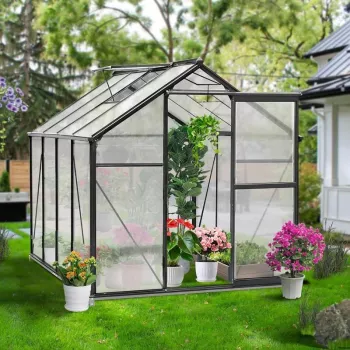
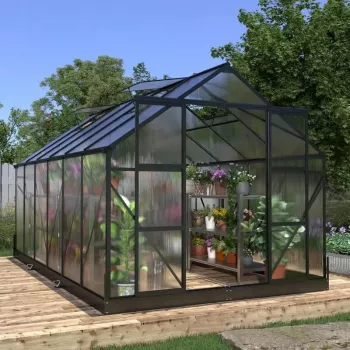
If you want a dedicated space for starts, shoulder-season production, and protected plant storage, the 6 x 8 FT Walk-In Polycarbonate Greenhouse with Aluminum Frame for Outdoors fits the role with an outdoor-friendly balance of usable growing space and manageable footprint. Its polycarbonate panel design supports more even light distribution and steadier conditions than fully exposed outdoor benches, while the aluminum frame suits humid greenhouse environments created by routine watering.
When harvest season ramps up, pairing your growing setup with efficient kitchen tools can help reduce waste—especially for sauce tomatoes. The Electric Tomato Strainer and Sauce Maker with Stainless Steel Body is a convenient add-on for processing larger batches after your greenhouse seedlings become heavy producers outdoors.
FAQ
Does a polycarbonate greenhouse need full sun all day?
Full sun is ideal in winter when light levels are lower, but many plants still do well with partial sun if you manage temperature and expect slower growth. Avoid heavy shade from evergreens, and consider how seasonal sun angles change so the greenhouse stays bright when it matters most.
How should a walk-in greenhouse be anchored outdoors?
Anchor to a stable base such as compacted gravel with a frame, pavers, or concrete, then use ground anchors or anchor bolts to reduce shifting and racking in wind. Proper anchoring also helps keep the door aligned, and it’s smart to recheck anchors and fasteners after storms.
How warm can a small greenhouse get during the day?
A small greenhouse can heat up rapidly in direct sun, even when outdoor temperatures feel mild, so overheating is a real risk. Use roof vents, open the door as needed, and add a circulation fan or shade cloth during bright stretches to keep temperatures in a safe range for your plants.









Leave a comment