8×14 Polycarbonate Greenhouse: Sliding Door + 4 Vents
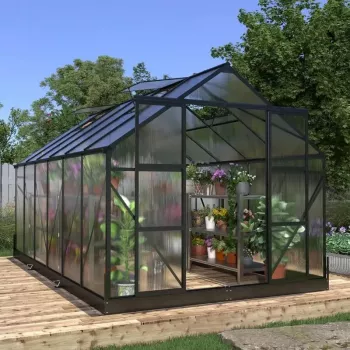
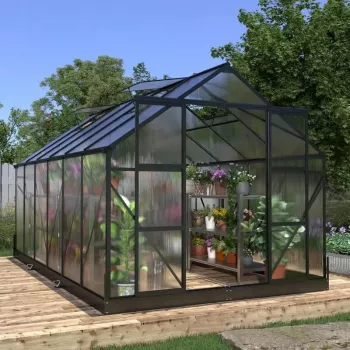
8x14x7.5 FT Polycarbonate Greenhouse with Sliding Doors and 4 Vent Windows
A roomy walk-in greenhouse makes it easier to start seeds earlier, protect tender plants, and keep a steadier growing environment through shifting weather. This 8x14x7.5 FT polycarbonate greenhouse pairs insulated panels with sliding doors and four vent windows to support airflow, temperature control, and day-to-day convenience for backyard growers.
At-a-Glance Overview
- Walk-in footprint suited for staging, shelving, and potting space
- Polycarbonate panels help diffuse light and buffer temperature swings
- Sliding doors for easy access and less space required than swing doors
- Four vent windows to support cross-ventilation and humidity control
- Designed for season extension, plant protection, and organized growing
Quick Specs and Features
| Feature | What it means for daily use |
|---|---|
| Size: 8x14x7.5 FT | Room for multiple benches/shelves with a usable central aisle |
| Polycarbonate glazing | Diffused light, improved heat retention vs. single-pane glass in many climates |
| Sliding doors | Convenient entry; helps reduce wind-slam and saves exterior clearance |
| 4 vent windows | Better ventilation on warm days; helps reduce condensation buildup |
| Walk-in structure | More comfortable plant care, pruning, and transplanting |
Who This Greenhouse Fits Best
- Gardeners who want earlier starts for tomatoes, peppers, herbs, and flowers
- Growers needing wind and cold protection for seedlings and young plants
- Anyone wanting a dedicated space for overwintering container plants (climate-dependent)
- Home gardeners looking to keep tools, trays, and supplies organized in one area
- Backyard growers who prefer adjustable ventilation rather than fully sealed structures
For shoppers comparing walk-in models, the 8x14x7.5 FT Polycarbonate Greenhouse with Sliding Doors and 4 Vent Windows is a strong match when the goal is more than seed-starting—think day-to-day plant care, up-potting, hardening off, and keeping supplies in one protected zone.
Polycarbonate Panels: Light, Warmth, and Plant Comfort
- Diffused light can help reduce harsh hot spots that stress leaves, especially in bright sun
- Insulating properties support more stable temperatures between day and night
- Condensation management improves when paired with consistent venting and airflow
- Panel care is generally straightforward: gentle wash, avoid abrasives, and keep channels clean
Polycarbonate glazing is popular for home greenhouses because it balances light transmission with a softer, more even spread of sunlight. That diffusion can be a practical advantage when raising tender seedlings that can scorch in intense direct sun. In many climates, the added insulation also makes shoulder-season growing easier by slowing down temperature drops after sunset.
Ventilation still matters. Even with insulating panels, humidity can build up from watering, damp soil, and plant transpiration. A consistent habit of venting (even briefly) keeps leaves drier and can reduce disease pressure over time.
Sliding Doors and Vent Windows: Practical Climate Control
- Use vent windows for controlled airflow while keeping the main door mostly closed on breezy days
- On hot afternoons, opening vents early helps prevent heat spikes and reduces plant stress
- Cross-ventilation supports healthier foliage by lowering humidity that can encourage disease pressure
- Consider adding a circulation fan for consistent airflow during still, humid weather
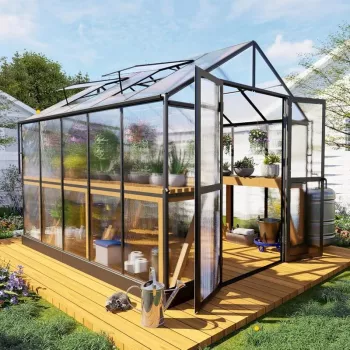
Sliding doors are a simple upgrade for daily convenience: they don’t swing into your path, they’re easier to use in tight yard layouts, and they help avoid “door slam” moments on gusty days. Pair that with four vent windows and you can fine-tune airflow without leaving the entrance wide open.
For best results, vent proactively. Sunny mornings can turn mild outdoor temps into greenhouse heat fast, especially when the air is still. Guidance from university and extension resources emphasizes that ventilation is a cornerstone of greenhouse management; see Penn State Extension — Greenhouse Ventilation for practical principles that translate well to home setups.
Placement and Site Prep
- Pick a level location with maximum sun exposure appropriate for the plants being grown
- Leave working clearance around the greenhouse for cleaning panels, checking vents, and snow/rain runoff access
- Plan drainage so water does not pool at the base; a slight grade away from the structure helps
- Use a stable base (pavers, compacted gravel, or a framed foundation) to improve door alignment and overall rigidity
- Account for prevailing winds; consider windbreaks or strategic placement near fencing (without shading the greenhouse)
Sun exposure is the other big decision. If the goal is spring seed-starting, prioritize maximum light. If you’re aiming for summer production, plan for ventilation and consider where a seasonal shade cloth could be added. For broader homeowner guidance, University of Georgia Extension — Greenhouses for Homeowners is a helpful reference for planning and expectations.
Setting Up the Interior for Efficient Growing
If your greenhouse growing turns into canning and sauce season later on, a purpose-built tool like the Electric Tomato Strainer and Sauce Maker with Stainless Steel Body can help process harvests efficiently—especially when tomatoes and peppers hit their peak at the same time.
Care, Maintenance, and Seasonal Tips
For ventilation best practices in varied conditions, the Royal Horticultural Society — Greenhouse and Conservatory Ventilation offers a clear overview that applies well to backyard structures with adjustable vents.
FAQ
Do polycarbonate greenhouses get too hot in summer?
Yes, they can heat up quickly in direct sun. Use the vent windows and door for cross-ventilation, add a circulation fan during still weather, and consider shade cloth during peak heat.
What foundation works well for an 8×14 greenhouse?
A level base is key for door alignment and stability. Common options include compacted gravel with a perimeter frame, pavers, or a small slab, depending on drainage, permanence, and local conditions.
How should the vent windows be used for better humidity control?
Crack vents early in the day to release warm, moist air before condensation builds. Pair venting with gentle airflow and avoid heavy watering late in the day so foliage can dry out before night.













Leave a comment