Mecanum Robot Car with Arm: AI Builds & Setup Guide
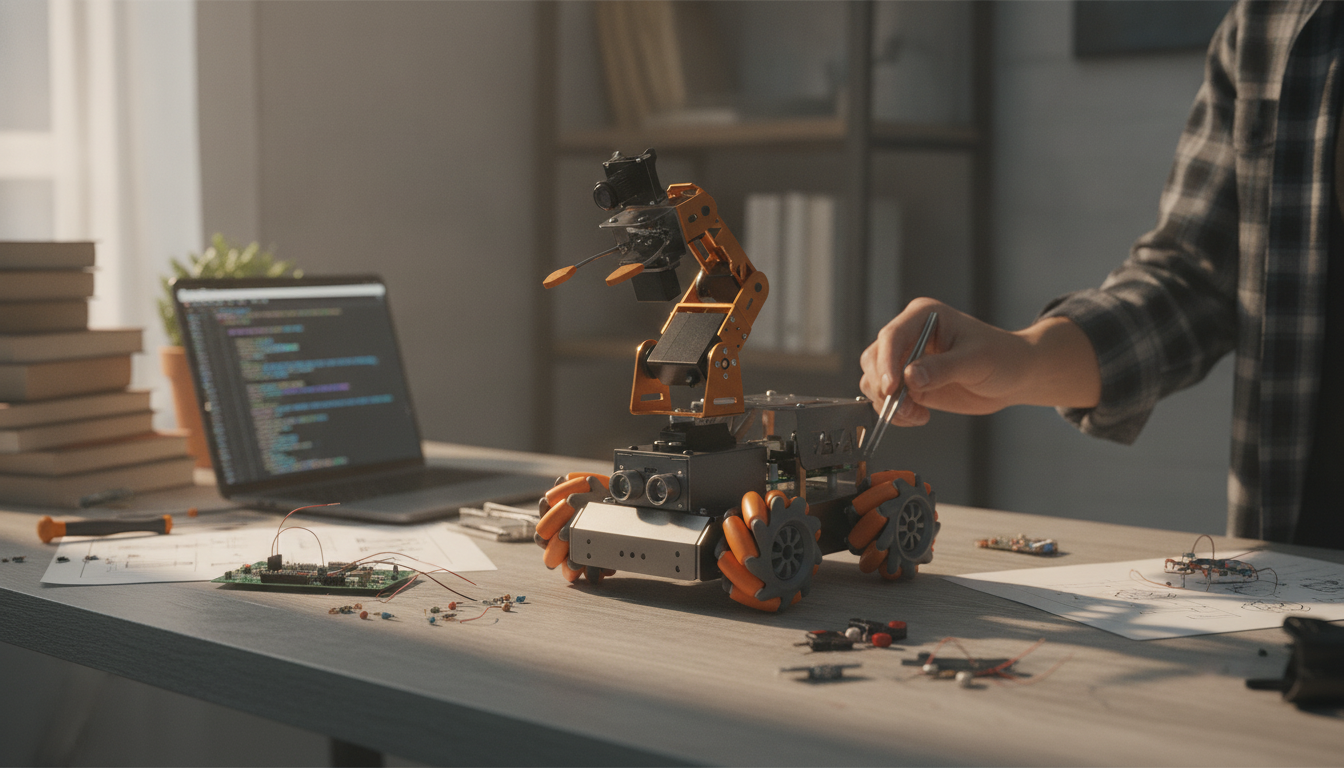
AI-Enhanced Smart Robot Car with Mecanum Wheels and Robotic Arm: Omnidirectional Control Meets Hands-On Robotics
A smart robot car built around mecanum wheels and a robotic arm opens up a wide range of build-and-learn projects—from smooth omnidirectional driving to pick-and-place tasks and vision-guided experiments. This guide breaks down what the platform can do, how to set it up for success, and what to look for when planning classroom demos, hobby builds, or prototyping workflows.
What This Robot Car Platform Enables
An omnidirectional robot car with an arm is a compact way to explore how real mobile robots navigate, perceive, and interact with objects. Instead of separating “driving” and “manipulation” into different projects, you can practice both on one platform—then iterate quickly as your code and mechanics improve.
- Omnidirectional motion: strafe, rotate, and move diagonally without turning the chassis first.
- Manipulation basics: a robotic arm can support grasping, lifting lightweight items, and simple sorting routines.
- AI-enhanced experimentation: a foundation for computer-vision demos (object tracking, lane following, marker detection) depending on the included controller and camera setup.
- STEM-friendly learning: combines mechanics, control, electronics, and programming in a single build.
- Prototyping value: validate navigation + actuation concepts before committing to a custom mechanical design.
Why Mecanum Wheels Change the Driving Experience
Mecanum wheels use angled rollers to generate forces that let the robot translate sideways as well as forward/back. That “slide” capability is the big difference: you can line up precisely with a target without doing the familiar back-and-forth turning dance that standard wheels often require. For background on the mechanics, see the reference on mecanum wheels.
- Strafing for alignment: approach objects or docking points with side-to-side correction rather than repeated turning.
- Tight-space mobility: useful on tabletops, lab benches, and indoor floors where turning radius is limited.
- Smoother manipulation workflows: the robot can reposition while keeping the arm oriented toward a target.
- Control considerations: mecanum drive benefits from calibrated motor speeds and consistent wheel contact for predictable movement.
Common Motion Patterns on Mecanum Drive
| Goal | Wheel Behavior (Conceptual) | Best Use Case |
|---|---|---|
| Strafe left/right | Opposing diagonal rollers create lateral force | Aligning to a bin, shelf edge, or marked line |
| Rotate in place | Left vs. right side wheel speeds counteract | Scanning an area or turning toward an object |
| Diagonal move | Blend of forward + strafe components | Approaching targets efficiently on a grid |
| Fine positioning | Low-speed micro-adjustments | Arm placement before gripping |
Robotic Arm: Practical Tasks and Realistic Expectations
A small robotic arm on a mobile base is ideal for learning sequencing and coordination: drive close, stabilize the chassis, then execute an arm routine. The sweet spot is repeatable, lightweight manipulation where success comes from consistent geometry, modest speeds, and a stable power supply.
- Best for lightweight objects: small blocks, foam pieces, or low-mass items with easy-to-grip geometry.
- Repeatability improves with setup: stable mounting, consistent power, and cautious speed settings reduce overshoot.
- Gripper success depends on materials: textured or rubberized contact surfaces help prevent slipping.
- Combine base + arm: use the chassis to do coarse positioning; use the arm to do fine positioning.
- Safety and durability: keep fingers clear, avoid stall conditions, and limit continuous high-load operation.
For the most dependable results, design tasks that tolerate small errors: larger “drop zones,” objects that are easy to pinch, and motion plans that pause briefly between steps. That pause often improves reliability because it lets the chassis settle and the arm stop oscillating before gripping.
AI-Enhanced Features to Explore (Depending on Configuration)
With the right controller and camera setup, this kind of robot becomes a hands-on playground for practical computer vision and autonomy. Many projects can be built on top of common vision libraries; if you’re using OpenCV, the official OpenCV documentation is a strong starting point, and marker workflows can be explored via ArUco detection.
- Object tracking: follow a colored object or recognized target while maintaining distance.
- Line following and navigation: drive along tape lines or printed paths; tune thresholds and speed for stability.
- Marker-based positioning: use fiducial markers (e.g., ArUco/AprilTag) for repeatable alignment experiments when supported.
- Teleoperation with assisted control: manual driving plus optional stabilization routines (speed limiting, heading hold) if available.
- Data collection projects: capture images/sensor readings for simple classification or control experiments.
Setup Checklist for Reliable Performance
Project Ideas That Fit This Platform
Specifications and Purchase Snapshot
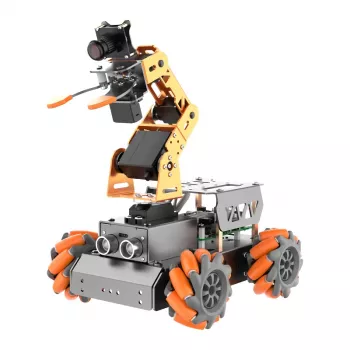
If you want an all-in-one robotics platform that blends omnidirectional control with manipulation practice, the AI-Enhanced Smart Robot Car with Mecanum Wheels and Robotic Arm is designed for indoor demos, student projects, and prototyping workflows. Before ordering, confirm what’s included (controller, camera, sensors, battery) on the product page so the kit matches your planned projects.
Quick Snapshot
| Item | Details |
|---|---|
| Product | AI-Enhanced Smart Robot Car with Mecanum Wheels and Robotic Arm |
| Availability | In stock |
| Price | 482.01 USD |
| Product page | View details |
More In-Stock Picks
FAQ
What makes mecanum wheels different from regular robot wheels?
Mecanum wheels enable omnidirectional movement, including strafing and diagonal motion, by using angled rollers to redirect force. They’re great for precise alignment, but they’re more sensitive to calibration and surface conditions than standard wheels.
Can the robotic arm lift heavy objects?
Small onboard arms are typically best for lightweight items, since lifting capacity depends on servo torque, arm leverage, and stable power delivery. For consistent results, use low-mass objects and avoid stalling the joints under load.
Is it suitable for beginners or classrooms?
Yes, especially with guided, step-by-step activities. Start with teleoperation and basic movement tests, then add simple arm sequences and vision features gradually as students gain confidence.















Leave a comment