Fun Goals: A Playful Checklist for Real Progress

Why “fun goals” work when willpower doesn’t
Traditional goal-setting can feel like a test you’re always failing. A “fun goals” approach flips the vibe: instead of demanding perfect discipline, it makes starting feel lighter—more like play than pressure. That shift matters because motivation is unreliable, but routines can be designed.
- Reduces resistance: when your goal session feels like an activity (music on, timer set, quick prompts), the mental barrier to begin drops.
- Builds consistency: short, enjoyable sessions create a repeatable rhythm that outperforms occasional “big motivation” days.
- Creates quick wins: playful challenges encourage tiny milestones that build confidence and momentum.
- Adds meaning: visual and reflective methods connect goals to values, not just outcomes—an important driver of follow-through.
If you like the research side, goal-setting is widely studied, including how clear, specific goals support performance and persistence (see the APA Dictionary of Psychology: Goal Setting and Mind Tools on Locke’s Goal-Setting Theory).
Start here: a playful goal-setting checklist (15–30 minutes)
This is the “no-drama” setup that works whether you’re energized or running on fumes. Keep it short on purpose—ending while you still feel good is a feature, not a flaw.
- Pick a theme for the session: “Fresh Start,” “Level Up,” “Calm & Consistent,” or “Bold Moves.”
- Choose one focus area for today: health, money, relationships, home, creativity, career, learning, or self-care.
- Write one north star sentence: what life should feel like when this goal is in motion (example: “My mornings feel spacious and steady.”).
- Set one small objective you can start in 10 minutes (not finish—start).
- Add one immediate, healthy reward: tea, a playlist, a short walk, a relaxing shower, or one episode of a favorite show.
- Decide the next appointment: schedule a follow-up session within 7 days.
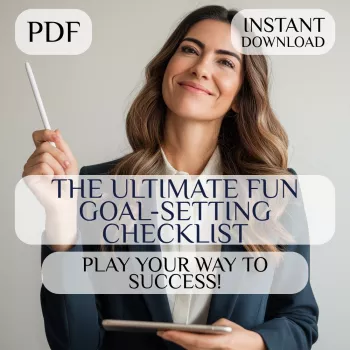
Want a ready-made version you can print and reuse? The Ultimate Fun Goal-Setting Checklist: Play Your Way to Success! (PDF) bundles the checklist with mini-games so you can rotate methods without reinventing your system each week.
Turn goals into a game: four quick activities for adults
When you’re stuck, the goal isn’t “try harder.” It’s “make it easier to take the next step.” These activities are designed to create movement with minimal overthinking.
1) Vision Board Party (solo or group)
Pick 3–5 images or words for the next 90 days. Then do the part most people skip: add one action per image. If you’re making a digital board, pairing it with visual ideas can help—AI Image Prompts for Stunning Visuals is a handy companion for generating fresh themes and aesthetics when your board feels bland or repetitive.
2) Goal Jar
Write micro-actions on slips you can finish in 5–15 minutes. Draw one daily or weekly to reduce decision fatigue. This works especially well when you’re building consistency and don’t want to spend your best energy choosing what to do.
3) Journal Prompts Sprint
Set a 7-minute timer. Answer one prompt. Stop when the timer ends—no bonus points for spiraling. Great prompts: “What’s the smallest step that would make this feel real?” or “What support would make this 20% easier?”
4) Checklist Bingo
Turn habits into a 3×3 board. “Win” with any row or column, then refresh weekly. This keeps your goal flexible—if life gets chaotic, you can still score a win without doing everything.
| Activity | Best for | Time needed | What you’ll produce |
|---|---|---|---|
| Vision Board Party | Big-picture motivation and clarity | 30–60 minutes | A visual map + 3–5 next actions |
| Goal Jar | Consistency and decision fatigue reduction | 20–40 minutes setup; 5–15 minutes per draw | A jar of micro-actions |
| Journal Prompts Sprint | Emotional clarity and values alignment | 7–15 minutes | Insights, obstacles, and next-step ideas |
| Checklist Bingo | Habit-building with low pressure | 10–20 minutes setup; 2–10 minutes daily | A simple weekly progress tracker |
Make it stick: simple rules for sustainable progress
One underrated piece: who you do life with. If your environment constantly pulls you off-track, your “discipline” will feel like a daily fight. You Become Who You Surround Yourself With explores how your social circle shapes habits and confidence—useful when your goals require new boundaries or better support.
A ready-to-use printable that bundles the fun methods
If you want everything in one place (instead of scattered notes), a printable can make follow-through simpler. The Ultimate Fun Goal-Setting Checklist: Play Your Way to Success! (PDF) is designed to guide you from idea to next action, whether you’re planning solo, doing a couples’ check-in night, or hosting a small vision board party.
Easy 7-day “play your way” plan
If you want a deeper look at how effective goals are structured, Harvard Business Review has ongoing writing on what makes goals work in real life (browse Harvard Business Review for goal-related articles and frameworks).
FAQ
What if goal-setting feels overwhelming or emotionally loaded?
Start with a 7-minute journal prompt sprint and choose one micro-action you can do in 10 minutes. Pick a low-pressure focus area and track attempts (showing up) rather than outcomes until it feels safer and more doable.
How do you run a vision board party that actually leads to action?
Limit the board to 3–5 visuals, then attach one next step to each visual before the party ends. Schedule a 7-day follow-up check-in and use a goal jar to draw one small action each week that connects back to the board.
Can this be used for personal goals and work goals?
Yes—use the same structure, but keep separate boards or jars for different life areas so priorities don’t blur. Make actions small, observable, and scheduled so progress is clear whether the goal is personal or professional.














Leave a comment