Student Spark Guide: Systems to Motivate University Students

Motivation Isn’t a Trait: It’s a System You Can Support
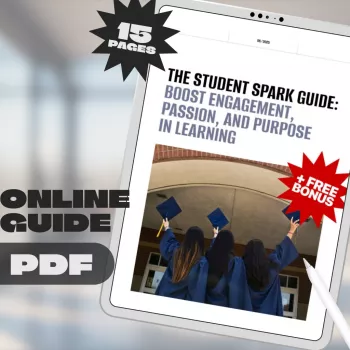
Motivation at the university level rarely stays constant. It shifts with workload pressure, how relevant the material feels, whether students feel seen and capable, and how clearly they understand the next step. The Student Spark Guide is a digital download built for educators, advisors, tutors, and mentors who want concrete, repeatable strategies to help students re-engage, connect coursework to personal goals, and rebuild momentum that lasts beyond a single class meeting.
Rather than relying on pep talks, the approach emphasizes practical design: small routines, clear expectations, meaningful choice, and feedback loops that help students experience progress. This aligns with well-established motivation research, including Self-Determination Theory and definitions of intrinsic motivation from the APA, which highlight autonomy, competence, and connection as key drivers of sustained engagement.
Why University Motivation Fades (and What to Address First)
When students disengage, it’s often less about “not caring” and more about friction in the learning environment. Four common drivers show up again and again: unclear expectations, low perceived relevance, overwhelm, and limited feedback loops.
- Unclear expectations: Students can’t invest effort confidently if they don’t know what “good” looks like.
- Low perceived relevance: If the value of a topic is invisible, motivation becomes purely grade-based.
- Overwhelm: When tasks feel too big, students default to avoidance or last-minute cramming.
- Limited feedback loops: Without timely signals of progress, students don’t know what to adjust.
A helpful distinction is compliance vs. commitment. Compliance looks like turning in tasks with minimal investment; commitment looks like owning learning decisions, seeking feedback, and applying concepts beyond the assignment.
Early signals to watch include missed low-stakes work, surface-level participation, avoidance of office hours, and “panic studying” right before assessments. A fast triage approach can help within one week: reduce friction, clarify the very next step, and restore a sense of progress through a small win.
What the Student Spark Approach Focuses On
The Spark method centers on four practical priorities: engagement, passion, purpose, and consistency. Together, they shift motivation from a mood into a repeatable process.
Spark pillars and what they change
| Pillar | What students experience | What educators/mentors do |
|---|---|---|
| Engagement | More frequent participation and effort | Use quick checks, structured discussion roles, and visible progress tracking |
| Passion | Greater curiosity and ownership | Offer choice, connect topics to lived examples, and invite reflection on strengths |
| Purpose | Clearer direction and persistence | Link tasks to goals, clarify “why it matters,” and build a personal learning plan |
Consistency is the “quiet multiplier.” Small routines (a two-minute opener, a structured check-in, a simple progress map) beat occasional motivational speeches because routines keep working on low-energy days.
Quick-Start Techniques for the Next Class or Meeting
These are designed to be lightweight, repeatable, and easy to implement without reworking an entire syllabus.
- The 2-minute “Why this, why now?” opener: Start with one concrete payoff (what this helps them do) plus one real-world application (where it shows up outside class).
- Choice within structure: Offer two prompt options, two formats (written or spoken), or two example pathways. Choice increases autonomy while keeping expectations clear.
- Micro-commitments: End with one next action that takes 10–20 minutes (not “study Chapter 6”). A small, specific action reduces avoidance.
- Progress visibility: Use a checklist or milestone map so students can locate themselves quickly and understand what “done” means.
- Momentum framing: Replace “catch up” language with “restart from here.” “Catch up” implies a deficit; “restart” implies agency and a clean next step.
In tutoring or advising contexts, these techniques work well as a short session structure: clarify the immediate goal, do one small practice rep, and close with a single next-step commitment.
Mentoring Moves That Rebuild Confidence and Persistence
When confidence is low, students often interpret setbacks as personal proof they “don’t belong” or “aren’t good at this.” The mentor’s role is to protect standards while removing shame from the learning process.
- Ask autonomy-supportive questions: “Which option feels most doable this week?” encourages ownership more than prescribing a plan.
- Normalize struggle while protecting standards: Separate the person from the performance: “This draft needs structure” instead of “You’re not a strong writer.”
- Create a minimum viable study plan: For busy weeks, define the smallest routine that still moves learning forward (two short sessions plus a practice quiz).
- Reflection that leads to action: “What worked? What didn’t? What changes next time?” keeps reflection from becoming rumination.
- Plan for obstacles: Identify one likely barrier and one specific workaround (time block, accountability partner, or a simplified task version).
For educators looking for research-friendly pathways to evidence-based strategies, resources like ERIC can help locate studies on motivation, feedback, and learning supports across disciplines.
Using the Guide in Real Settings
The Student Spark approach is flexible across roles and formats:
What Comes With the Digital Download
Recommended Tools and Comfort Picks (In Stock)
- The Student Spark Guide: Boost Engagement, Passion, and Purpose in Learning (Digital Download)
- Calvin Klein Women’s White Leather Sneakers
- Calvin Klein Jeans Women’s Beige Sneakers
- Cozy Velvet Winter Pajama Set for Boys
Get the Student Spark Guide
Shop: The Student Spark Guide (Digital Download)
FAQ
How can university educators motivate students without lowering standards?
Increase clarity and structure, then add meaningful choice within clear expectations. Frequent low-stakes practice with timely feedback helps students build competence while standards remain explicit and consistent.
Does this work for students who are overwhelmed or burned out?
Yes. Focus on small, achievable next steps, make progress visible, and plan for likely barriers. Short routines that rebuild momentum are often more effective than major overhauls during high-stress periods.
Is the Student Spark Guide suitable for online or hybrid courses?
Yes—use consistent weekly rhythms, clear instructions, participation scaffolds, and timely feedback signals. Many prompts and check-ins translate well to discussion boards and brief synchronous sessions.















Leave a comment