Wide Screen Night Vision Binoculars: A Clearer View
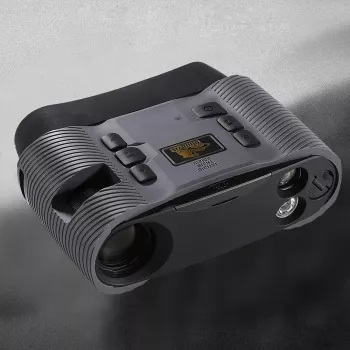
Night Vision Binoculars with a Wide Screen Display: Why the Viewing Experience Feels Different
A wide screen display can make nighttime viewing feel more natural—less tunnel effect, easier scanning, and quicker target reacquisition. That matters whether you’re watching a treeline for wildlife movement, checking a long driveway, or trying to keep your bearings while walking along a dark path. The best night vision binoculars with a wide screen display don’t just boost visibility; they make it easier to interpret what you’re seeing and stay oriented in low light.
What a Wide Screen Display Changes in Real Use
A wide screen-style viewing experience typically feels less restrictive than narrow viewing devices. Instead of feeling “boxed in,” you can often scan with fewer micro-adjustments, which can reduce fatigue and improve awareness.
- More comfortable viewing: The scene feels broader and less like you’re peering through a tube, which can help during long observation sessions.
- Faster scanning: When sweeping across tree lines, trails, yards, or open fields, a wider viewing feel can reduce constant re-centering.
- Better tracking of motion: Moving subjects—wildlife, boats, vehicles—are easier to follow when you’re not fighting a narrow, tunnel-like view.
- Simpler pass-around use: If multiple people share the device, a more forgiving viewing experience can help each person “find” the scene faster.
Key Performance Factors That Matter at Night
Night performance isn’t just about magnification or marketing range claims. Real-world results depend on how well the unit gathers light, how clearly it displays detail, and how effectively it handles total darkness with IR.
- Sensor sensitivity: Determines how well faint ambient light (moonlight, starlight, distant streetlights) becomes a usable image.
- Display clarity: Impacts perceived sharpness, legibility of fine detail, and eye comfort when viewing for extended periods.
- Magnification and digital zoom: Helpful for identification, but higher zoom can reduce brightness and amplify hand shake.
- Field of view: Wider is usually better for scanning; narrower may help when observing a distant, stationary subject.
- IR illuminator strength and adjustability: Essential in near-total darkness, indoors, or under heavy canopy—especially when there’s little to no ambient light.
| Feature | Wide Screen Display Binoculars | Typical Narrower Viewing Devices |
|---|---|---|
| Scanning for wildlife or activity | Faster, less refocusing and re-aiming | Slower scanning; more repositioning |
| Eye comfort over time | Often more comfortable for extended use | Can feel more fatiguing for some users |
| Situational awareness | Generally improved due to a more natural viewing feel | More tunnel-like view can reduce awareness |
| Use while moving (walking/boating) | Can be easier to keep oriented | Orientation can feel more constrained |
Where These Binoculars Fit Best
Wide screen viewing can be especially helpful when you’re not just “looking,” but actively scanning, navigating, or monitoring a changing scene.
- Wildlife observation: Watch nocturnal animals without visible lights that can disturb behavior.
- Property monitoring: Check fences, barns, driveways, and outbuildings after dark without turning on bright floodlights.
- Camping and hiking: Scan the camp perimeter and spot movement at the treeline.
- Boating and dock use: Identify shoreline features and obstacles in low light, where glare and reflections can complicate visibility.
- Outdoor events: Locate people or objects around dim venues while keeping your hands free from high-powered flashlights.
Practical Setup Tips for a Cleaner Image
A few small adjustments often make a bigger difference than jumping straight to maximum settings. The goal is a clear image with minimal glare, noise, and washout.
- Start with ambient light: Test performance at dusk so you learn how the device behaves before you need it in full darkness.
- Use IR only when needed: Increase gradually; strong IR can bounce back from fog, dust, rain, or close objects and create a washed-out look.
- Stabilize the view: Brace elbows against your body, or use a monopod/tripod when observing at higher zoom levels.
- Avoid reflective surfaces: Windows, glossy signs, and water spray can create flare and blown highlights.
- Let eyes adjust: Dim nearby phone screens and avoid white lights to preserve night-adapted vision.
For general night-operations best practices and lighting considerations, reputable guidance on night vision use and glare reduction can be found through the Federal Aviation Administration (FAA) and the International Dark-Sky Association.
Comfort, Controls, and Build Details to Prioritize
Care and Storage for Long-Term Reliability
Product Options Available Now
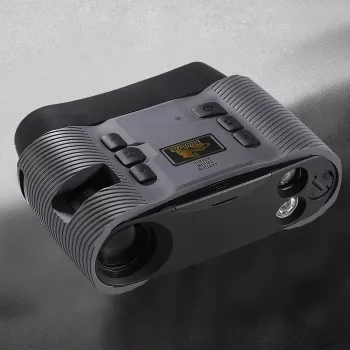
Night Vision Binoculars with Wide Screen Display are a strong match for users who want a broader, more comfortable viewing experience for scanning and observation after dark. They’re especially practical for wildlife watching, property checks, camping, and low-light navigation where a wider viewing feel can improve orientation. For steadier viewing at higher zoom, consider pairing them with spare batteries or a compact tripod.
For a different kind of outdoor convenience—especially if you’re monitoring a garden or greenhouse alongside nighttime property routines—the Smart Planter with Real-time Temperature and Soil Moisture Monitoring can help track conditions without constant manual checks.
FAQ
Do night vision binoculars work in complete darkness?
They can, but it depends on whether the device has an IR illuminator. In low light, night vision amplifies available ambient light; in complete darkness, an IR illuminator provides invisible (to most people) light so the sensor can form an image, with usable range varying by conditions.
Will the IR illuminator be visible to animals or people?
Many IR LEDs show a faint red glow at the emitter, and it may be noticeable at close range depending on wavelength and intensity. Some animals may be more sensitive to subtle cues, so avoid unnecessary IR use and never shine IR toward anyone’s eyes.
What causes a washed-out or snowy image at night?
Common causes include using IR too strongly at close distances, backscatter from fog/rain/dust, nearby bright lights, dirty lenses, or heavy digital zoom. Reducing IR intensity, changing angle/distance, cleaning the lenses, and lowering zoom usually improves clarity quickly.















Leave a comment