Tiny Thanks Daily Routine: 3-Step Gratitude Checklist
Tiny Thanks, Big Impact: A Simple Daily Gratitude Routine You Can Stick With
A consistent gratitude practice doesn’t need long journaling sessions or perfect mornings. The most lasting routines are short, repeatable, and tied to moments already in the day—waking up, meals, transitions, and bedtime. This guide lays out a practical daily checklist approach to help build mindfulness and positivity in a way that feels doable, even on busy or stressful days.
Research summaries from places like the Greater Good Science Center (UC Berkeley) and Harvard Health Publishing suggest gratitude can support wellbeing over time—especially when it’s practiced consistently. The goal here is simple: make it easy enough that you actually do it.
Why gratitude works best as a routine (not a mood)
Waiting until you “feel grateful” can turn gratitude into an occasional mood rather than a steady skill. A routine makes it more reliable.
- Link it to cues: Gratitude becomes more automatic when it’s attached to something that already happens—morning coffee, the commute, brushing teeth, or charging your phone.
- Reduce decision fatigue: Repeating the same small prompts is easier than reinventing a practice every day.
- Let small practices compound: Noticing one good thing daily can gradually shift attention toward what’s supportive, steady, and meaningful.
- Consistency beats intensity: A two-minute practice done daily can be more stabilizing than a long session done once in a while.
The “Tiny Thanks” method: three daily checkpoints
This method is built around quick checkpoints that fit real life. Each one is 30–60 seconds, and stopping while it still feels easy is part of what makes the habit sustainable.
- Morning (set the tone): Name one thing that supports today—someone who has your back, an ability you can rely on, a resource you have access to, or an opportunity you can use.
- Midday (reset attention): Notice one small win or relief—something that went slightly better than expected, even if the day is messy overall.
- Evening (close the loop): Reflect on one moment of connection, kindness, or learning, and write a single sentence about why it mattered.
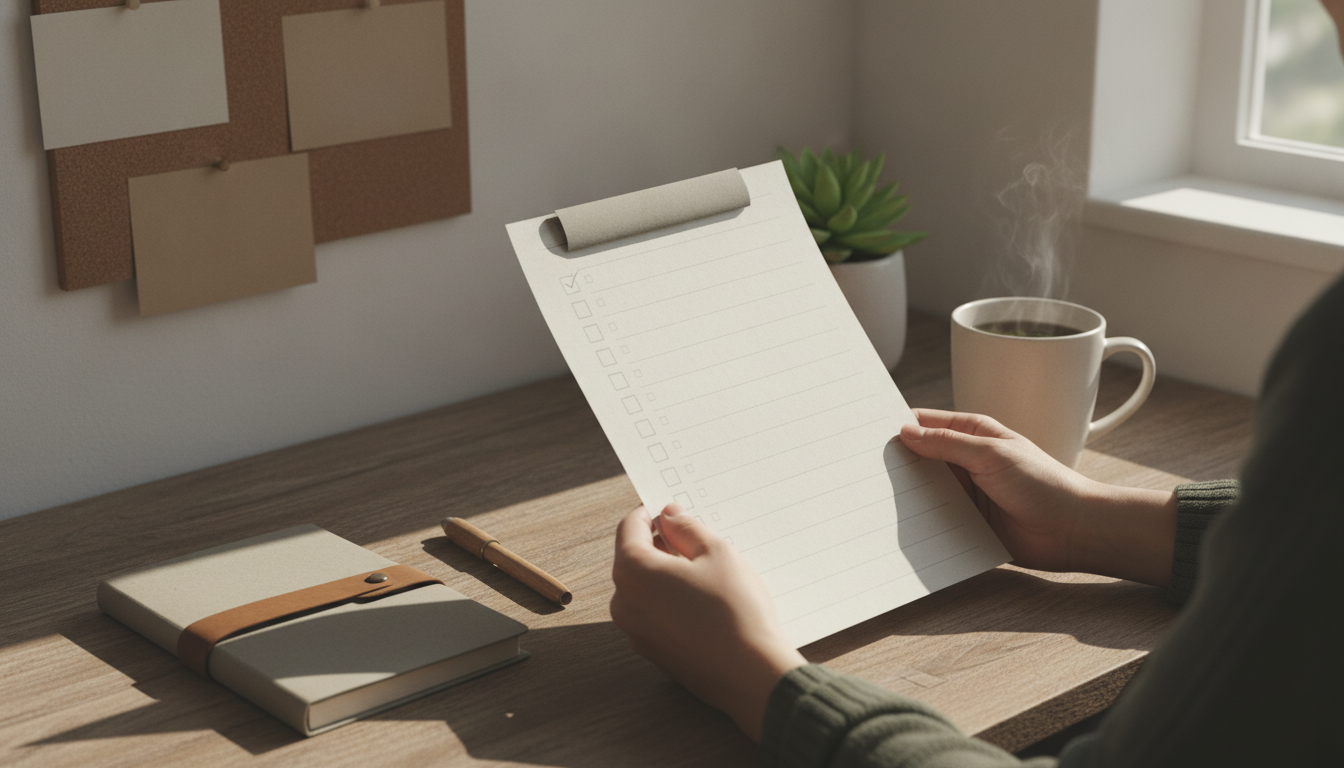
If you want a structured page you can print and reuse, the digital download Tiny Thanks, Big Impact: Your Daily Gratitude Routine (Printable Checklist) is designed around quick prompts so you can keep going even when energy is low.
A printable checklist makes the habit easier to keep
Some days, free-writing feels great. Other days, it feels like homework. A checklist keeps the practice light and consistent.
- Clear prompts on low-energy days: A simple checklist removes the pressure to be “deep” or “inspiring.”
- A fresh start anytime: Printing multiple copies makes it easy to begin again without feeling behind—just grab the next page.
- Visible progress: Checking a box creates a small sense of completion, which helps reinforce the habit loop.
- Pattern spotting: Using the same prompts helps you notice what reliably lifts mood, what drains energy, and what deserves more attention.
Daily gratitude checklist (sample routine)
Keep it visible—on a nightstand, desk, fridge, or tucked into a planner pocket. Use one line per prompt; short phrases are enough. For higher-energy days, add one optional “bonus” prompt so the routine still fits low-energy days.
| Time | Prompt | Example | Time needed |
|---|---|---|---|
| Morning | One support for today | “Clean water and a warm shower.” | 1 minute |
| Midday | One small win | “Answered the email I was avoiding.” | 30 seconds |
| Afternoon | One pleasant sensory moment | “Sunlight on my face for two minutes.” | 30 seconds |
| Evening | One connection or kindness | “A friend checked in; it mattered because I felt seen.” | 1–2 minutes |
| Anytime (optional) | One reframe | “This delay protects my schedule later.” | 30 seconds |
How to practice gratitude on hard days (without forcing it)
Hard days are exactly when a tiny routine can help—but only if it doesn’t become performative or pressured.
- Use “neutral gratitude”: Focus on basics that remain true even when emotions are heavy: a bed, a meal, a working phone, a moment of quiet.
- Try “micro-gratitude”: Take 5–10 seconds to notice something slightly helpful, not necessarily joyful: “The room is warm,” or “I made it here safely.”
- Avoid comparisons: Gratitude isn’t minimizing pain; it widens attention to include support alongside difficulty.
- Protect the habit: If the day is overwhelming, complete only one checkbox and stop.
For additional stability, pairing a mindset routine with practical planning can be powerful. If money stress is part of what weighs on your day, Master Your Paycheck: The Smart, Calm, and Confident Way to Save Your Salary offers a calmer, step-by-step structure for getting organized.
Common obstacles and quick fixes
- “Nothing comes to mind”: Use categories—body, home, food, people, nature, work tools, transportation, learning. Pick one category and name one item.
- “I forget”: Tie the checklist to an anchor habit: coffee, lunch, charging your phone, brushing teeth.
- “It feels repetitive”: Rotate prompts weekly (support, win, comfort, connection, learning, effort, boundary, rest) while keeping the same three checkpoints.
- “I don’t have time”: Shrink it to one sentence per day. Consistency beats completeness.
Making it your own: simple personalization ideas
Digital download tips: printing and using the checklist
FAQ
How long should a daily gratitude routine take?
Aim for 2–5 minutes total. On busy days, scale down to just one prompt so the habit stays intact.
Can gratitude help when the day is stressful or disappointing?
Yes—especially through “neutral” and “micro” gratitude, which focus on small stabilizers rather than forced positivity. It doesn’t deny difficulty; it broadens attention to include what’s still supporting you.
Is a checklist better than a gratitude journal?
A checklist is easier to maintain because it reduces decision fatigue and keeps the practice short. Journaling can be better for deeper reflection, and many people use both: checklist daily, journaling occasionally.
















Leave a comment