Best Motorcycle Tire Pressure Gauge: Dial or Digital?
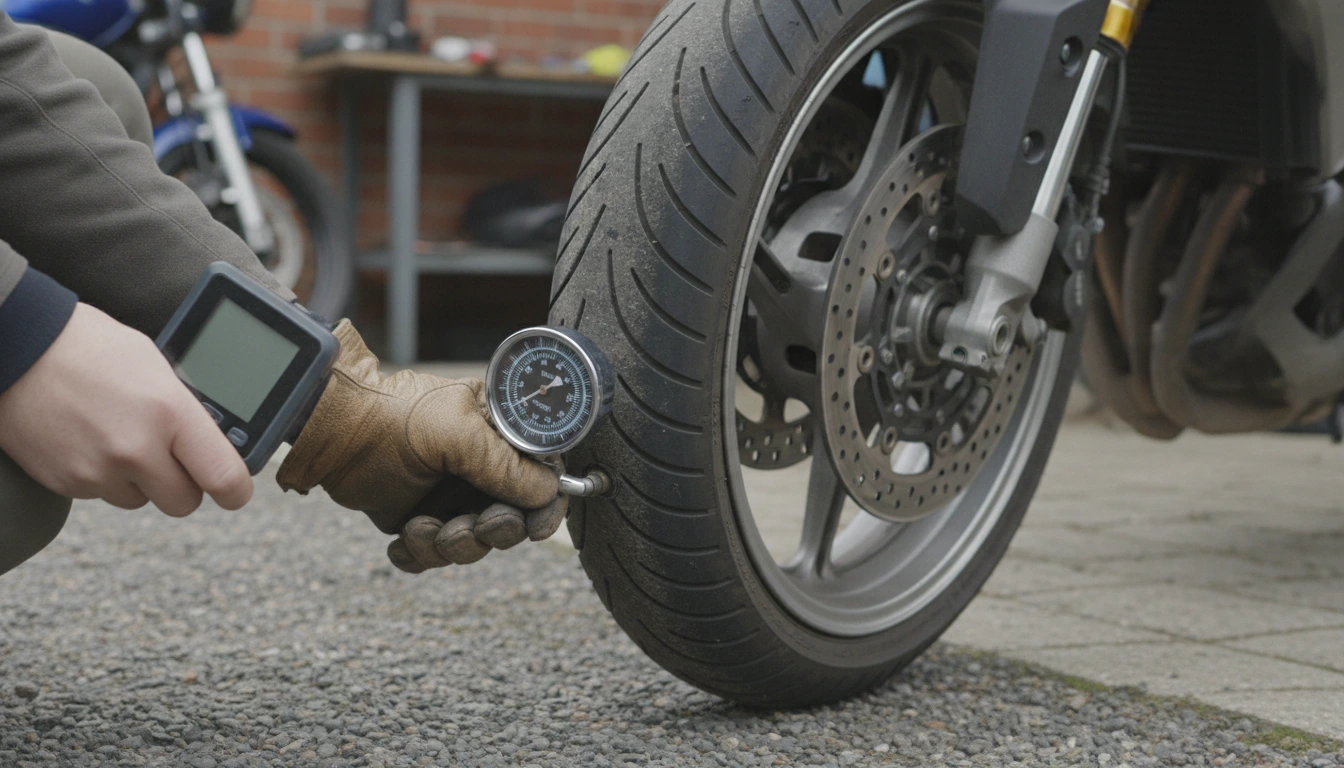
What is the best tire pressure gauge for a motorcycle?
The best tire pressure gauge for a motorcycle is a dial or digital gauge that reads accurately in the lower PSI range your bike actually uses, stays consistent over time, and is easy to use on tight valve-stem locations. Many motorcycle tires run roughly in the 28–42 PSI neighborhood, so a gauge that’s most precise in that band (rather than a high-range automotive-only tool) is usually the smartest pick.
What to look for in a motorcycle tire pressure gauge
Accuracy at low-to-mid PSI: A gauge can be “accurate” on paper yet still be hard to read precisely at 30–40 PSI if it’s designed for much higher pressures. Look for a gauge with clear markings and a reputation for consistency.
Valve access and fit: Motorcycles often have limited clearance around the valve stem—especially with large brake rotors, spokes, or certain wheel designs. An angled head, a short chuck, or a dual-head design can make checks faster and reduce air loss while attaching.
Build quality: A solid metal body, a protected dial or screen, and a firm hose (if included) help the gauge survive tool bags, saddlebags, and garage drops.
Dial vs. digital vs. pencil gauges
Digital gauges are quick to read and great in dim light, but they rely on batteries and vary in durability. Dial gauges are easy to read, typically sturdy, and don’t need power—making them a reliable everyday choice. Pencil gauges are compact and inexpensive, but they’re easier to misread and can be less consistent, especially after heavy use.
Pair your gauge with a dependable inflator
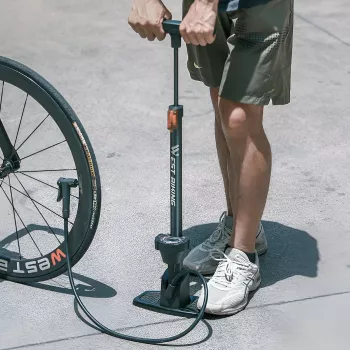
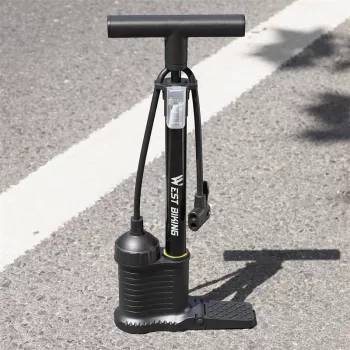
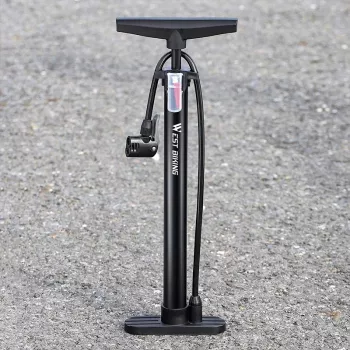
A great gauge only helps if inflation is controlled and repeatable. For a setup that works for both bikes and motorcycles, see this guide to a 160 PSI dual-valve floor pump for bikes and motorcycles, which highlights features that make topping off easier without fighting the valve connection.
FAQ
How often should you check motorcycle tire pressure?
Check at least weekly and before longer rides. Always measure when tires are cold for the most reliable reading.













Leave a comment